Advertorial

  • UPDATE: Wellim FortisCortex inventory is critically low. Orders fulfilled first-come, first-served.

Home > Balance & Safety > FortisCortex by Wellim 

Vertigo Warning: 5 Signs It’s Getting Dangerous + 2 Ways to Stop It

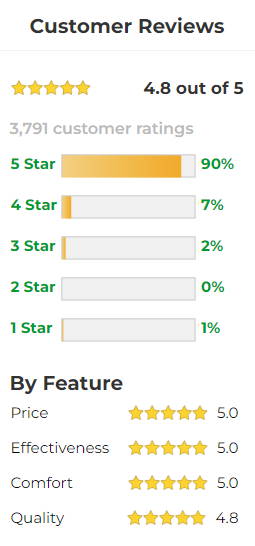
4,891 Ratings

"Vestibular dysfunction increases serious fall risk by 12x and is linked to significantly elevated motor vehicle accident rates in adults over 45. Most patients are never warned." – Vestibular Disorders Association

A grandmother in Ohio missed the first step on her staircase.


She'd been dizzy for two years. She was used to it. She thought she knew her limits.


She was at the bottom before she understood what happened. Three broken ribs. A fractured wrist. A hip that never fully healed.


A contractor in Georgia blacked out for two seconds merging onto the highway. The car drifted. He overcorrected. The vehicle rolled.


A teacher in Florida had thirty years without a single incident. Then one Tuesday the room spun so violently she collapsed in front of her students. The ER found nothing. Sent her home with a pamphlet.


These aren't worst-case scenarios. They're what happens when the warning signs get ignored.


Every one of these people had months of signals their dizziness was becoming dangerous. Signals their doctors didn't recognize. Signals nobody told them to take seriously.


Here are those signals.

Sign #1: You Grab Things Without Thinking About It

The wall. The counter. The door frame. You don't even notice yourself doing it anymore.


That automatic grab means your brain no longer fully trusts its own balance signals. It's recruited your hands as a backup system.


The day you reach for something that isn't there — that's the accident.

Sign #2: You've Quietly Changed How You Move

You sit before putting your shoes on. You don't look up fast anymore. You've stopped taking stairs you don't have to take.


None of this was a conscious decision. Your body made it for you.


This is called vestibular avoidance behavior. It means the deterioration is already advanced enough that your brain has restructured your entire daily life around it. The danger is what happens the day circumstances don't allow for avoidance.

Recommended

GET YOUR FORTISCORTEX NOW

✔️ 60-Day Money-Back Guarantee

Sign #3: Your Episodes Are Getting Shorter

Most people take this as improvement. It isn't.


Shorter episodes mean your brain has learned to snap into emergency compensation mode faster — because the inner ear signal has become so unreliable that the brain no longer waits to confirm the problem.


The underlying damage is worse. But now you have no warning window. No time to sit down. No time to pull over.

Sign #4: Crowds, Lights, and Motion Make It Worse

Grocery stores. Highway driving. Scrolling. A ceiling fan.


This is called visual vestibular mismatch. Your inner ear is failing badly enough that your brain is using your eyes as the primary balance input. Complex visual environments overwhelm that backup system.


This is the most dangerous warning sign for driving. Every mile on the highway is a mile with no safety margin.

Sign #5: You've Had a Near Miss and Talked Yourself Out of It

You caught yourself on the counter. You swerved slightly at a light. You sat down hard and told yourself you got up too fast.


Research is unambiguous: near misses cluster in the months before serious incidents. They are not flukes. They are a failing system approaching the edge of its capacity.


The people who ignored their near misses are in the statistics. The people who didn't — still drive themselves to their grandchildren's recitals.

Your Doctor Called It "Just Vertigo."

Here's what he didn't tell you.


Chronic dizziness isn't random. It isn't aging. It has five specific, measurable, biochemical causes happening inside your inner ear right now — causes that meclizine, low-sodium diets, and vestibular PT were never designed to touch.


Your inner ear runs on a single blood vessel with zero backup. When that vessel becomes restricted, the sensory hair cells that power your balance go dark — slowly, silently, for years before the accident.


A 2024 clinical study found that dizziness severity correlated with zinc depletion in the inner ear at r=0.89. Nearly perfect. The more depleted — the worse the dizziness. This has never appeared on a standard blood panel. No doctor has ever tested you for it.


Two paths from here.

Path 1: The Medical Pathway

(2–4 years. Thousands of dollars. Ends in the same place.)

GP → ENT → MRI that finds nothing → neurologist → vestibular specialist waitlist of 3–6 months, $800–$2,400 out of pocket.


Best case: vestibular PT at $150–$300 a session, frequently uncovered by insurance. Trains your brain to compensate around the damage. Doesn't restore the inner ear. Most patients plateau.


Worst case: gentamicin injections that destroy vestibular hair cells to eliminate the corrupted signal. Some patients trade episodic vertigo for permanent balance impairment — a shuffling gait, inability to walk in darkness, for life.


The most likely outcome after all of it:

"There's nothing more we can do. You'll just have to manage it."

Path 2: What Thousands Found After They Stopped Waiting

They stopped muting the alarm. They started addressing what triggered it.


FortisCortex was built around one question: what does a starving, oxidatively damaged, metabolically failing inner ear actually need?


✅ Zinc gluconate — rebuilds the cochlea's antioxidant shield. The depletion no doctor ever tested for.

✅ Korean Red Ginseng — the only natural compound with a direct peer-reviewed study showing it accelerates vestibular compensation. Dilates the inner ear's single blood vessel. Feeds the starving hair cells.

✅ Alpha Lipoic Acid — penetrates cochlear cell membranes. Shown in clinical research to protect inner ear hair cells and reduce tinnitus severity.

✅ EGCG from Green Tea — protects cochlear hair cells from damage. Improves microvascular circulation specifically in inner ear tissue.

✅ Berberine HCL — crosses the blood-brain barrier. Suppresses the silent neuroinflammatory loop degrading your vestibular nerve.

✅ Chromium + Banaba Leaf — stabilizes blood sugar. Addresses the metabolic power failure disrupting inner ear fluid regulation.

✅ Resveratrol — activates the cochlea's own oxidative stress defense. Preserves structures most vulnerable to age-related vestibular decline.

Not treating the symptoms. Addressing the cause.

GET YOUR FORTISCORTEX NOW

What People Are Saying

"I had a near miss on the highway. Scared me enough I stopped driving for three weeks. Found this at 2am on a forum. I'm driving again. Something changed."

– Robert D., 58, Ohio

"I had a fall in January. Nobody saw it. I didn't tell my husband. I was ashamed. Six months later I haven't grabbed a wall in I don't know how long. I stopped counting."

– Carol S., 67, Florida

"My daughter called every morning to check if I was okay. She stopped — because I told her she didn't need to. That's the whole story."

– Margaret T., 64, Tennessee

GET YOUR FORTISCORTEX NOW

The Clock Doesn't Stop While You're Deciding.

Two capsules a day. No waitlist. No procedures. No permanent tradeoffs.


First signs of change: 3–4 weeks. Full restoration: 3–6 months.


Every day the warning signs above go unaddressed, the margin gets thinner.


180-Day Money Back Guarantee. No questions. No risk.


The only decision that carries real risk is the one you make at the top of the next staircase.

GET YOUR FORTISCORTEX NOW

UPDATE: As of March 13, 2026 - The demand for FortisCortex has surged, and our inventory is flying off the shelves. Order your own before it's too late.

Lock in your order while you can to get SPECIAL PRICING

NOTE: This deal is NOT available in stores or anywhere else.

60 Day Money Back Guarantee

Fast Shipping

Guaranteed Safe and Secure Checkout

No-Hassle Returns

GET YOUR GUTCORE NOW